The First Breath Through the Regulator: What Really Happens to Body and Mind
|| ScubaLiveTV || Insights || Actuality || Interviews || TV Web || History || Scuba Diving || Freediving || Video collection || Nature and Environment || Collaborate with us ||
Stay up to date on our activities Subscribe to our Newsletter
The First Breath Through the Regulator: What Really Happens to Body and Mind
A seemingly simple action that triggers deep physiological, neurological, and cognitive responses in the human body.
The first breath taken through a scuba regulator represents one of the most significant moments in a diver’s experience. It is not merely the technical start of a dive, but a true biological and mental adaptation process to an environment for which humans are not naturally designed.
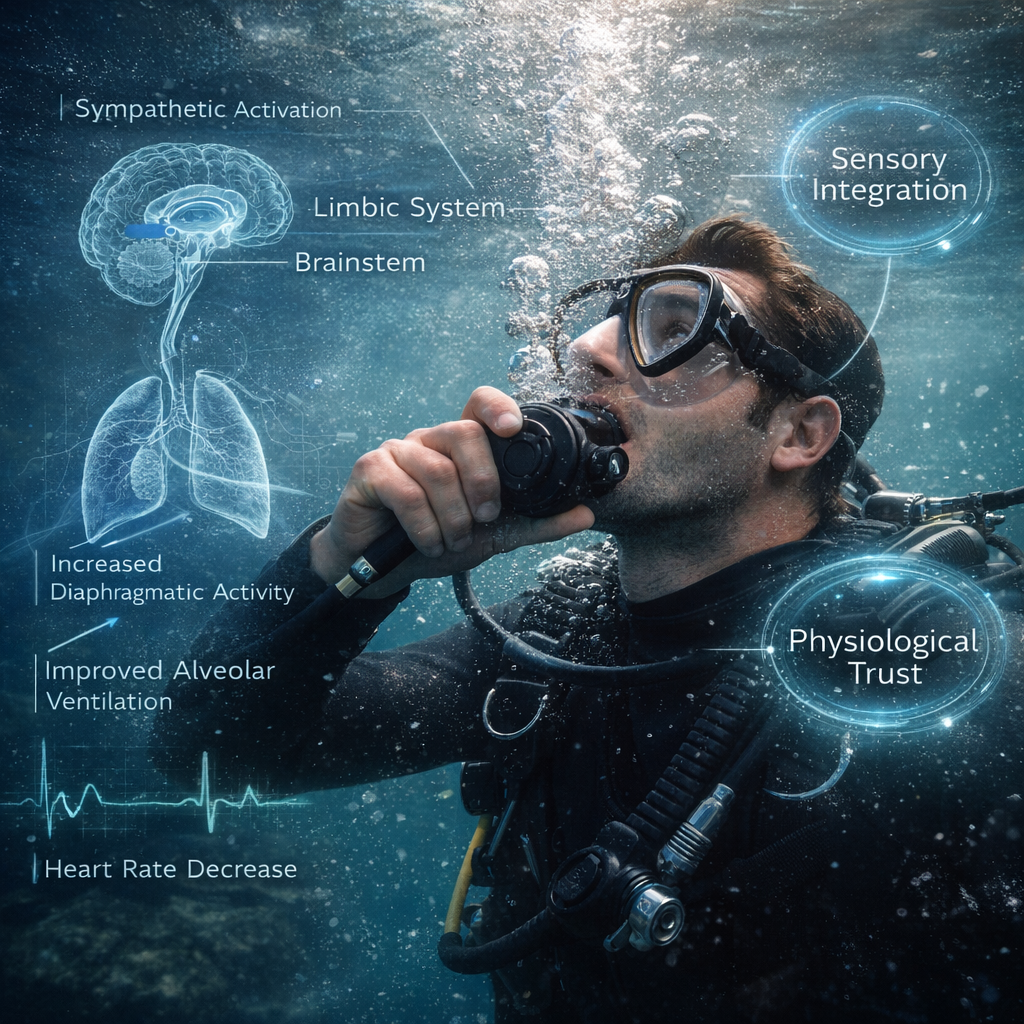
From a physiological perspective, the change is immediate. Breathing, until that moment automatic and silent, becomes mediated by a mechanical device. Air reaches the lungs with a different density, a clearly audible sound, and a slight inspiratory resistance. The brain particularly the brainstem and limbic system initially interprets this condition as unusual.
The autonomic nervous system therefore enters an evaluation phase. In the first moments, a mild activation of the sympathetic nervous system is often observed: increased alertness, faster breathing, and slight muscle tension. This is an evolutionary control response, not a sign of danger. The body is assessing whether the new air source can be trusted.
Once breathing proves continuous and adequate, a fundamental transition occurs: parasympathetic activity begins to prevail. Heart rate decreases, breathing becomes deeper and more regular, and muscle tension reduces. This shift marks the beginning of physiological trust in the breathing system.
At the pulmonary level, breathing through a regulator alters ventilatory mechanics. Inhalation tends to slow and become more conscious, promoting improved alveolar ventilation and more efficient diaphragmatic use. This not only increases comfort but also contributes to reduced air consumption and improved buoyancy control.
From a neurological and cognitive standpoint, the first underwater breath triggers a process of sensory integration. The brain reorganises input from vision, balance, proprioception, and respiration, forming a new perceptual map. This is why many divers report a sudden sense of calm, clarity, and heightened presence.
This moment also marks a profound psychological shift: the sea ceases to be an external element and becomes a habitable space. The individual transitions from observer to participant, directly influencing awareness and emotional regulation.
From a diving safety perspective, this phase is crucial. Slow, regular breathing reduces physiological stress, improves buoyancy control, enhances decision-making, and lowers the risk of errors. Conversely, short and fragmented breathing maintains an alert state, increasing cognitive load and physical fatigue.
For this reason, diver training places great emphasis on the first breaths underwater. At Underwater Academy, initial regulator breathing is introduced progressively and under guided conditions. The aim is not merely to teach a technique, but to allow body and mind to adapt safely, building trust in the equipment, the instructor, and oneself.
With experience, the action becomes automatic. Yet the nervous system never forgets that first instant. Because in that breath there was more than air there was a conscious choice to trust, slow down, and be supported by a different environment.
That is where a diver is truly born.
Begin your diving journey with training that respects physiology, safety, and awareness. Discover Underwater Academy’s scuba diving courses.


- PADI Professional Freediving Courses

- PADI Freediving Specialty Courses

- PADI Freediving Recreational Courses

- Children’s Program and 1st Level Mermaid Junior Course
- Mermaid Junior 2nd Level Course

- 1st level memaid course for adults

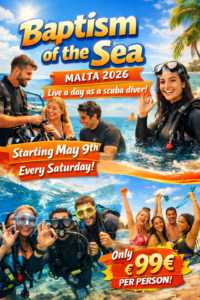
- Become a scuba diver in a weekend in Malta

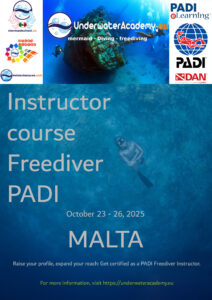
- PADI Freediver Instructor Crossover – Malta
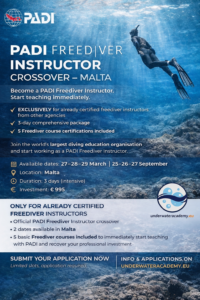
- Become a PADI Freediver Instructor: Upcoming Course in Malta – October 23, 24, 25 & 26
| YouTube | facebook | instagram | WhatsApp or telegram group |