Marine Biology in the Mediterranean: How Life Truly Works Beneath the Surface
|| ScubaLiveTV || Insights || Actuality || Interviews || TV Web || History || Scuba Diving || Freediving || Video collection || Nature and Environment || Collaborate with us ||
Stay up to date on our activities Subscribe to our Newsletter
Marine Biology in the Mediterranean: How Life Truly Works Beneath the Surface
A complex, fragile, and fascinating balance: the Mediterranean is not just a sea, but a living system that breathes, adapts, and constantly evolves.
When we look at the sea from the surface, what we see is only a threshold. Beneath that moving line between air and water lies a world governed by precise, ancient, and deeply interconnected biological laws. The Mediterranean Sea, often perceived as “small” compared to the oceans, is in fact one of the most complex and biologically significant marine environments on the planet.
Understanding how life functions beneath the surface means entering a system where every organism, even the most invisible one, plays a fundamental role.
A young sea with extraordinary biodiversity
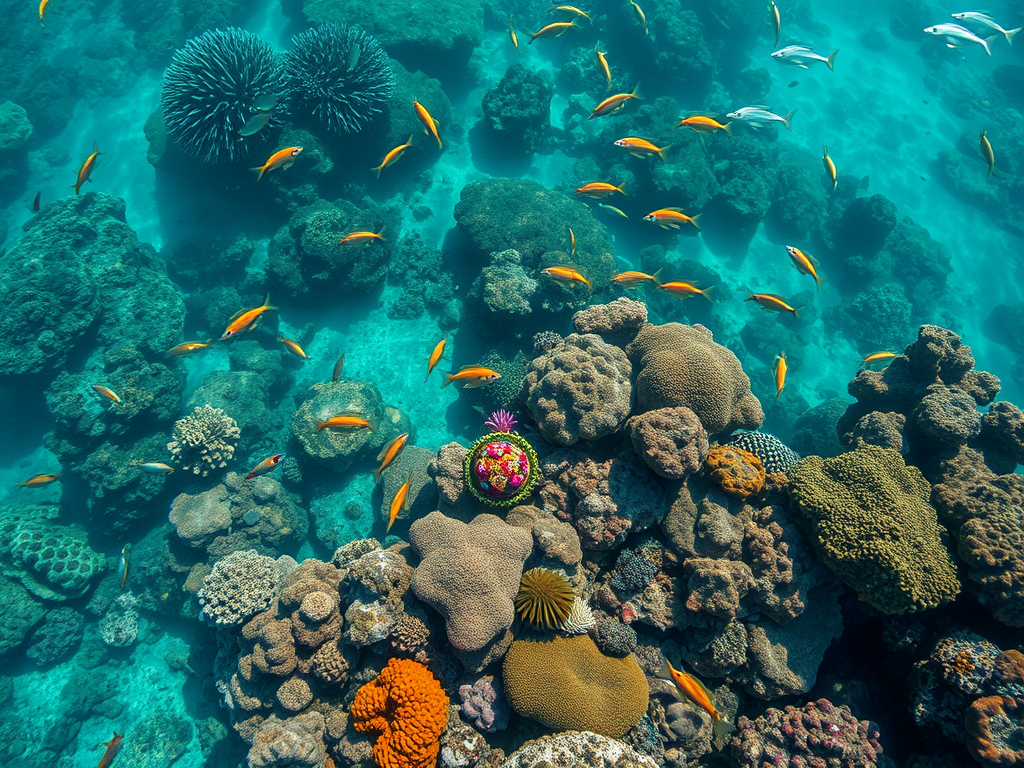
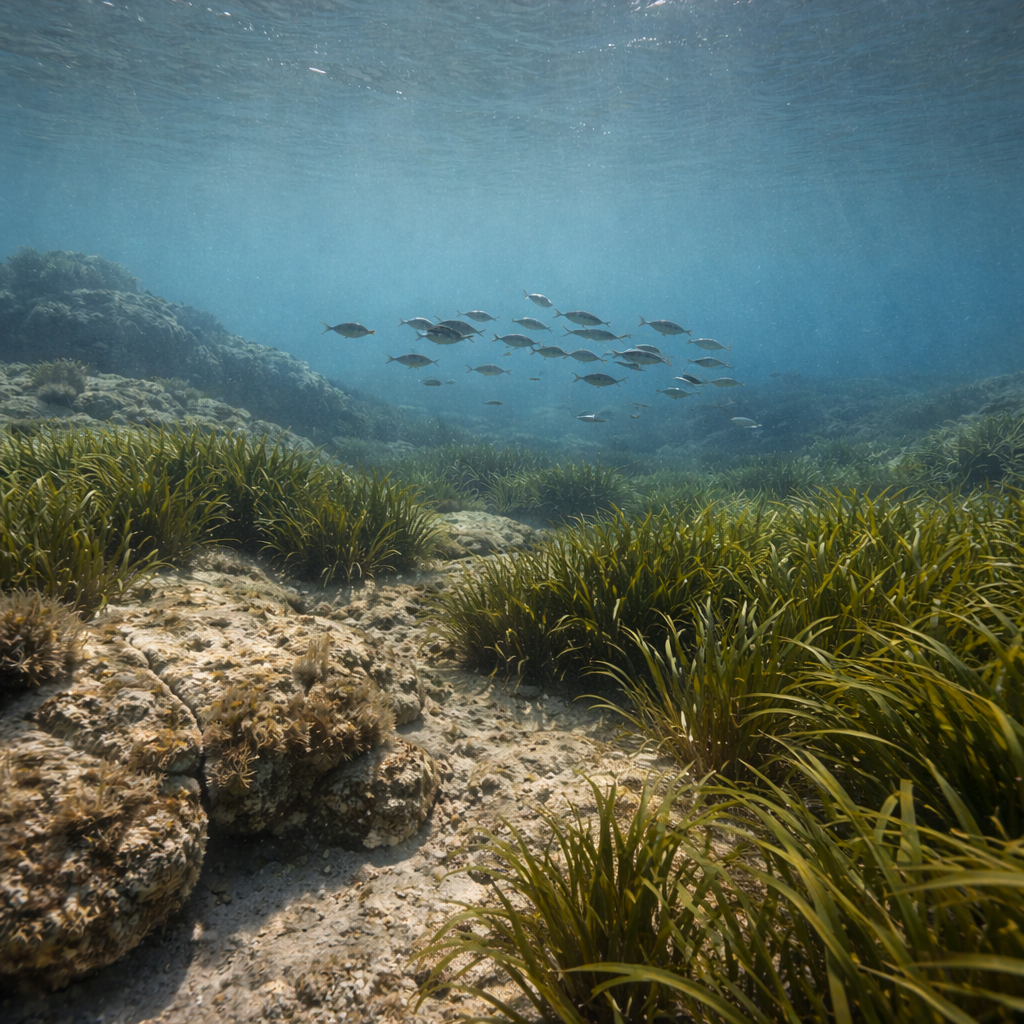
From a geological perspective, the Mediterranean is relatively young. Yet it hosts an exceptional level of biodiversity: over 7% of the world’s marine species live here, within less than 1% of global ocean waters.
This richness results from:
- continuous exchange with the Atlantic Ocean
- strong gradients of temperature and salinity
- highly diverse seabeds
- a long evolutionary history
For those who practise scuba diving or freediving, every Mediterranean dive becomes a journey through a mosaic of habitats, often separated by just a few metres.
The invisible role of plankton
At the foundation of Mediterranean marine life lies plankton, a vast community of microscopic organisms drifting through the water column. Though invisible to the naked eye, plankton is responsible for:
- oxygen production
- carbon dioxide absorption
- sustaining the entire marine food web
Without plankton, the Mediterranean would be biologically lifeless. Every fish, cephalopod, and predator ultimately depends on this first level of life.
Food webs: balance, not competition
In the Mediterranean, marine biology does not operate on a simple “survival of the strongest” principle, but on dynamic balance. Predators, prey, and decomposers maintain stability until external pressures disrupt it.
When a single species declines or proliferates excessively, the entire system reorganises itself. This is why the loss of seemingly minor organisms can trigger profound ecological consequences.
Understanding these mechanisms helps divers become more respectful and environmentally aware observers.
Remarkable adaptations to underwater life
Life beneath the surface has driven extraordinary adaptations:
- hydrodynamic body shapes
- camouflage and mimicry
- highly developed sensory systems
- life cycles synchronised with light and temperature
For freedivers in particular, observing these adaptations fosters a deeper connection with a world that has evolved solutions radically different from our own.
A sea under growing pressure
The Mediterranean is also one of the most heavily impacted seas on Earth:
- intense maritime traffic
- coastal pollution
- rising water temperatures
- invasive alien species
Marine biology teaches us that the sea is neither infinite nor endlessly resilient. Every pressure leaves a trace—often invisible in the short term, but significant over time.
Knowledge as protection
Studying marine biology is not an academic exercise; it is a tool for conservation. Within Underwater Academy’s scuba diving, freediving, and environmental specialisation courses, understanding the marine environment is an integral part of training.
An informed diver:
- observes more
- touches less
- interferes less
- understands more
Entering the sea as conscious guests
Beneath the surface, we are neither privileged spectators nor masters. We are temporary guests in a system that functions perfectly without us, yet can be easily disrupted by our lack of awareness.
Marine biology reminds us of a simple truth: the sea does not need heroes it needs attentive observers.
Discover the scuba diving, freediving, and environmental specialisation courses at Underwater Academy and learn to experience the Mediterranean with greater awareness


- Divemaster PADI
 Description: The PADI Divemaster course organized by Underwater Academy is a pivotal step for those pursuing a career in the diving industry. Through this advanced program, students acquire specialized skills
 - EFR Instructor PADI
 The PADI Emergency First Response Instructor certification ensures confidence in one’s ability to respond effectively and is recognized and appreciated by the diving community and instructors. Sharing acquired knowledge and
 - PADI Public Safety Diver
 If you have the opportunity to work with local authorities and be part of an underwater rescue team, conduct search and recovery dives, or even participate in underwater criminal investigations,
| YouTube | facebook | instagram | WhatsApp or telegram group |