What the Human Brain Really Experiences When Descending into Depth
|| ScubaLiveTV || Insights || Actuality || Interviews || TV Web || History || Scuba Diving || Freediving || Video collection || Nature and Environment || Collaborate with us ||
Stay up to date on our activities Subscribe to our Newsletter
What the Human Brain Really Experiences When Descending into Depth ?
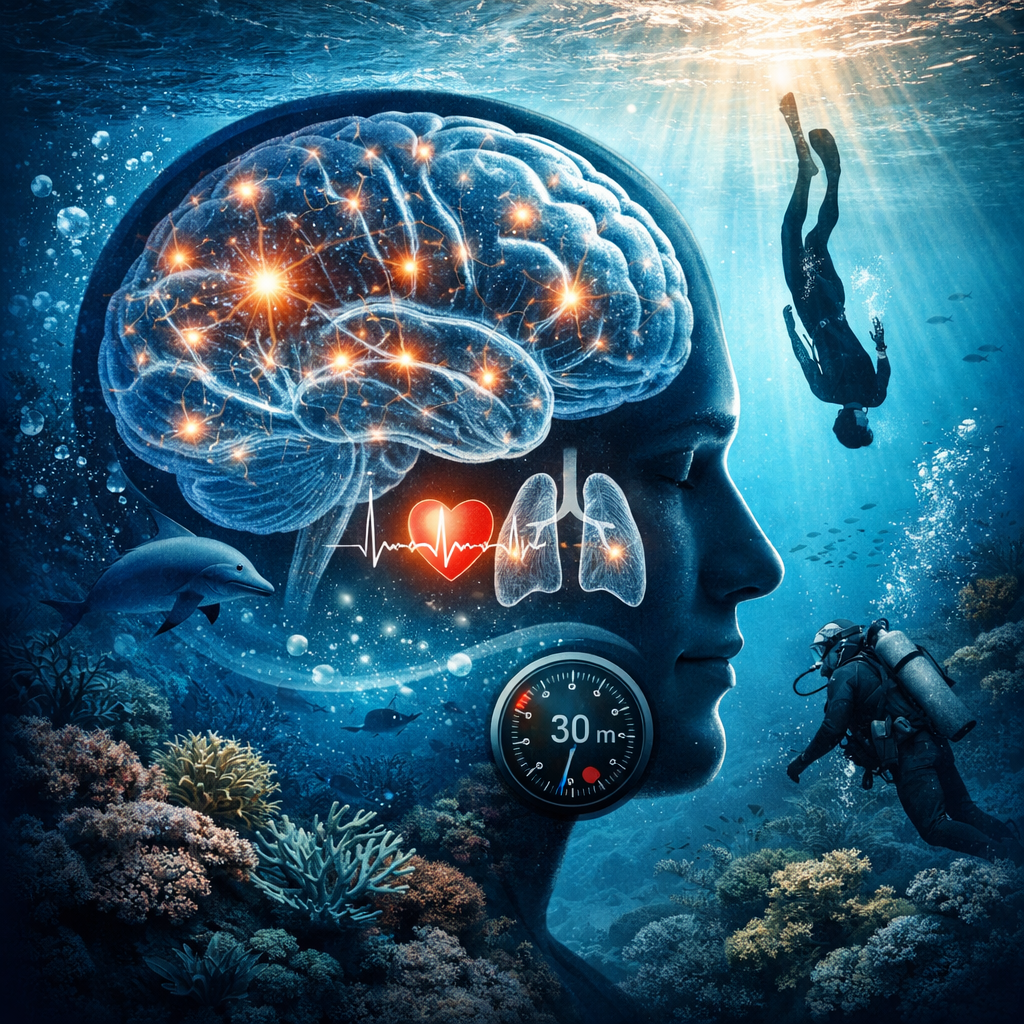
Descending into depth is not just a physical experience. It is, above all, a neurological journey.
When a human enters the water and begins the descent, the brain is suddenly placed in an environment it was never designed for. Pressure, silence, changing light, and an altered perception of time force the nervous system to adapt rapidly. And it is precisely within this adaptation that something extraordinary happens.
The Silence That Reorganizes the Mind
One of the first signals the brain receives at depth is a drastic reduction in external stimuli. Sounds fade, movements slow, and the visual field becomes simpler. This condition reduces activity in the prefrontal cortex the part of the brain responsible for overanalysis and daily stress.
The result is a deep sense of calm, often described by divers as “mental stillness” or “total presence.”
Breathing as a Neurological Anchor
In scuba diving and even more so in freediving breathing becomes the core of the experience. Slow, controlled inhalations send direct signals to the parasympathetic nervous system, which governs relaxation. The brain interprets this rhythm as safety.
This is why many divers report an unusual mental clarity underwater: fewer thoughts, greater awareness of the present moment.
Depth and the Perception of Time
Underwater, the brain also alters its perception of time. Minutes seem to stretch. This happens because attention is focused on a limited set of essential elements: buoyancy, breathing, surroundings. When multitasking disappears, time loses its urgency.
It is no coincidence that many people find diving to be a powerful mental reset.
The Fine Line Between Control and Letting Go
As the descent continues, the brain enters a unique state: it must maintain technical control while simultaneously learning to let go. When this balance is achieved, divers enter what many describe as “underwater flow.”
It is a feeling of complete harmony between body, mind, and environment and one of the reasons why those who begin diving often never stop.
Why This Experience Changes People
The brain associates diving with a state of deep well-being. Over time, this association becomes emotional memory. This is how the sea stops being just a place and becomes an inner space.
Whether through recreational diving or advanced freediving, in locations such as Malta or Italy, every descent becomes a silent dialogue with the nervous system.
And it is there in the blue that slows everything down that the human brain rediscovers a more authentic version of itself.
- Divemaster PADI
 Description: The PADI Divemaster course organized by Underwater Academy is a pivotal step for those pursuing a career in the diving industry. Through this advanced program, students acquire specialized skills
 - EFR Instructor PADI
 The PADI Emergency First Response Instructor certification ensures confidence in one’s ability to respond effectively and is recognized and appreciated by the diving community and instructors. Sharing acquired knowledge and
 - PADI Public Safety Diver
 If you have the opportunity to work with local authorities and be part of an underwater rescue team, conduct search and recovery dives, or even participate in underwater criminal investigations,
| YouTube | facebook | instagram | WhatsApp or telegram group |