Helmet Divers: History, Techniques, and Risks of the First Underwater Dives
|| ScubaLiveTV || Insights || Actuality || Interviews || TV Web || History || Scuba Diving || Freediving || Video collection || Nature and Environment || Collaborate with us ||
Stay up to date on our activities Subscribe to our Newsletter
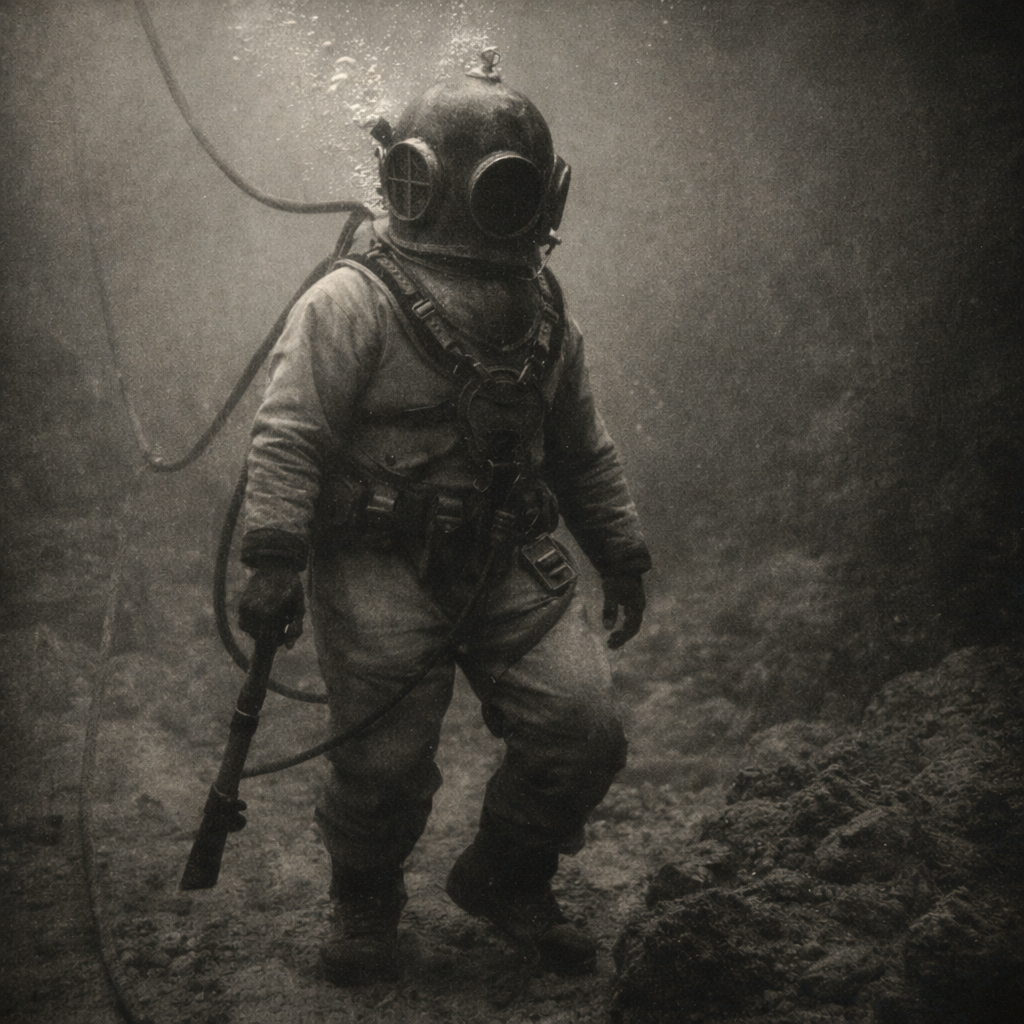
Helmet Divers: History, Techniques, and Risks of the First Underwater Dives
Before tanks and modern technology, humans descended into the depths relying on ingenuity, courage, and systems that were as brilliant as they were dangerous.
When we think of modern scuba diving, we imagine regulators, dive computers, technical wetsuits, and standardised safety procedures. Yet the history of underwater diving began much earlier, at a time when descending below the surface meant facing the unknown with virtually no margin for error. The pioneers of this era were the helmet divers, the true forerunners of modern diving.
Who were the helmet divers
Helmet divers were professional underwater workers who, from the 19th century onwards, operated beneath the surface using rigid diving suits connected to the surface by air hoses. Their purpose was not exploration, but work: salvage operations, harbour construction, ship repairs, and military missions.
They were highly trained individuals, often with naval or industrial backgrounds, descending into the depths wearing extremely heavy equipment and possessing only limited knowledge of the physiological risks involved.
Diving techniques of the time
Helmet diving techniques were based on three essential elements:
- Rigid metal diving suit and helmet
- Surface-supplied air, pumped manually
- Heavy ballast, to overcome buoyancy
Helmet divers did not swim; they walked along the seabed. Every movement was slow and deliberate, communication was carried out through signals along the umbilical line, and bottom time depended on physical endurance, air quality, and sea conditions.
The risks: working without understanding the body
One of the most dramatic aspects of helmet diving history lies in the unknown risks. At the time, diving physiology was largely unexplored. Concepts such as:
- decompression sickness
- nitrogen narcosis
- gas toxicity
were not yet understood.
Many helmet divers suffered paralysis, permanent neurological damage, or death due to rapid ascents, contaminated air, or equipment failures. The sea offered no second chances.
Their contribution to modern diving
Despite the dangers, helmet divers played a crucial role in the development of underwater science. Empirical observations, accidents, and operational experience led to the first decompression tables and a growing understanding of human limits underwater.
Without helmet divers, there would be no:
- recreational scuba diving
- technical diving
- structured modern dive training
Every diver today inherits, often unknowingly, the hard-earned knowledge built through the sacrifices of these pioneers.
From labour to education
Today, diving is accessible, safe, and highly structured thanks to education and training. In the scuba diving courses at Underwater Academy, the history of helmet divers is not just a fascinating story, but a lesson in humility—reminding us why safety protocols are central to every dive.
The same applies to freediving and mermaid disciplines: different practices, yet all shaped by the same cultural evolution that transformed underwater descent from a hazardous necessity into a conscious experience.
A legacy that must not be forgotten
Helmet divers did not seek records or beauty. They sought to complete a task. And yet, through their courage and resilience, they paved the way for everything modern divers now take for granted.
Remembering them means recognising that diving did not begin as a sport, but as a human necessity to go beyond the surface.
Discover the roots of modern diving by joining the training programmes offered by Underwater Academy, where history, technique, and safety come together. More information about our courses.


- Become a scuba diver in a weekend in Malta

- PADI Freediver Instructor Crossover – Malta
- Become a PADI Freediver Instructor: Upcoming Course in Malta – October 23, 24, 25 & 26
| YouTube | facebook | instagram | WhatsApp or telegram group |