New Diving Regulations: What Has Changed for Scuba Divers and Freedivers
|| ScubaLiveTV || Insights || Actuality || Interviews || TV Web || History || Scuba Diving || Freediving || Video collection || Nature and Environment || Collaborate with us ||
Stay up to date on our activities Subscribe to our Newsletter
New Diving Regulations: What Has Changed for Scuba Divers and Freedivers
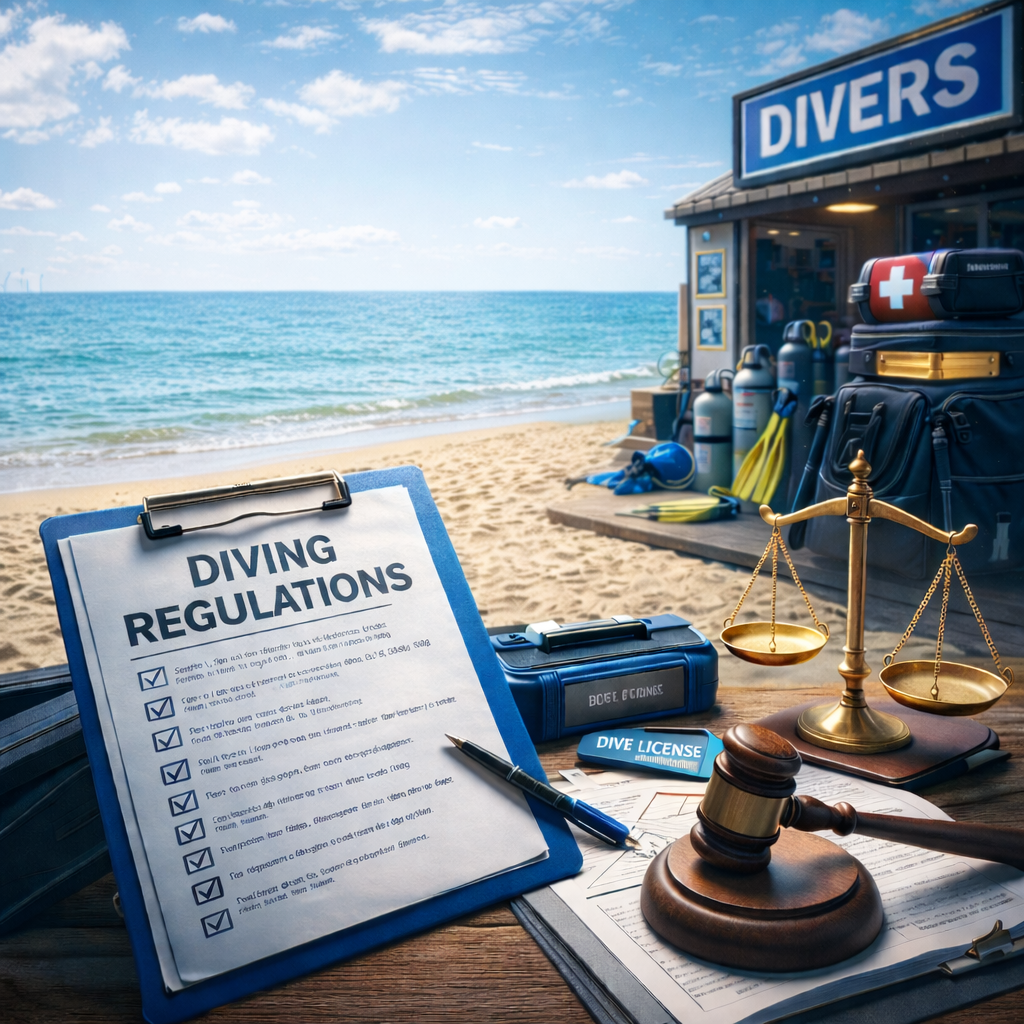
In recent years, both scuba diving and freediving have increasingly come under legislative review. Safety concerns, marine environmental protection, and the growing number of people practising underwater activities have led authorities to update existing regulations and introduce new ones. For divers, freedivers, and industry professionals alike, understanding these changes is no longer optional—it is an essential part of responsible practice.
Why diving laws are changing
The rise in participation, the expansion of diving tourism, and greater attention to incidents at sea have highlighted the need for clearer and more consistent rules. New regulations generally focus on three main objectives:
- improving diver safety
- protecting the marine environment
- more precisely regulating professional and recreational activities
These principles apply to both recreational scuba diving and freediving—very different disciplines that share the same operational environment.
What has changed for scuba divers
For scuba divers, recent updates mainly concern:
- greater emphasis on certified training, with stricter controls on instructors and dive centres
- updated safety procedures, particularly for night dives, deep dives, and wreck diving
- clearer obligations regarding insurance, briefings, and group management
In this context, following structured training pathways—such as the scuba courses and specialisations offered by Underwater Academy—is essential not only to improve skills, but also to remain compliant with current regulations.
What’s new for apnea and freediving
Freediving is also increasingly regulated. In many areas, new or reinforced rules now include:
- an absolute ban on solo freediving
- mandatory surface signalling
- clearer guidelines for training, depth limits, and instructional activities
These measures are not intended to restrict freedom, but to significantly reduce risk. Training therefore plays a central role: Underwater Academy’s freediving courses are designed to teach not only technique and performance, but also responsibility and regulatory awareness.
Marine environment and new responsibilities
Another key element of recent legislation is environmental protection. Diving in marine protected areas, on historical wrecks, or in sensitive ecosystems is now subject to stricter rules. Touching, removing, or disturbing marine life is not only unethical, but often illegal.
For this reason, many schools and academies—including Underwater Academy—integrate responsible diving practices, habitat protection, and environmental awareness into their training programmes.
What about mermaid diving?
The mermaid discipline, which is rapidly growing in popularity, is also entering the regulatory framework. In several countries this includes:
- certified training pathways
- specific rules regarding safety, depth, and operational context
- increased focus on group and event management
Structured mermaid courses allow practitioners to enjoy the discipline creatively, while remaining compliant with regulations and maintaining high safety standards.
Knowing the rules to dive better
New diving regulations should not be seen as a limitation, but as a tool. Understanding the rules allows divers to dive with greater confidence, protect themselves, and contribute to a sustainable future for the ocean.
Continuous training, regular updates, and awareness are now an integral part of being a scuba diver, freediver, or mermaid. This is where the evolution of modern diving truly begins.
- Become a scuba diver in a weekend in Malta

- PADI Freediver Instructor Crossover – Malta
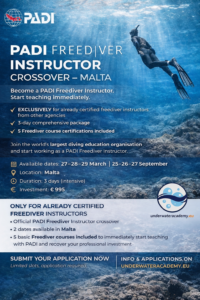
- Become a PADI Freediver Instructor: Upcoming Course in Malta – October 23, 24, 25 & 26

| YouTube | facebook | instagram | WhatsApp or telegram group |