Sea, Environment and Awareness
|| ScubaLiveTV || Insights || Actuality || Interviews || TV Web || History || Scuba Diving || Freediving || Video collection || Nature and Environment || Collaborate with us ||
Stay up to date on our activities Subscribe to our Newsletter
Sea, Environment and Awareness
Beyond greenwashing: building an authentic relationship with the ocean
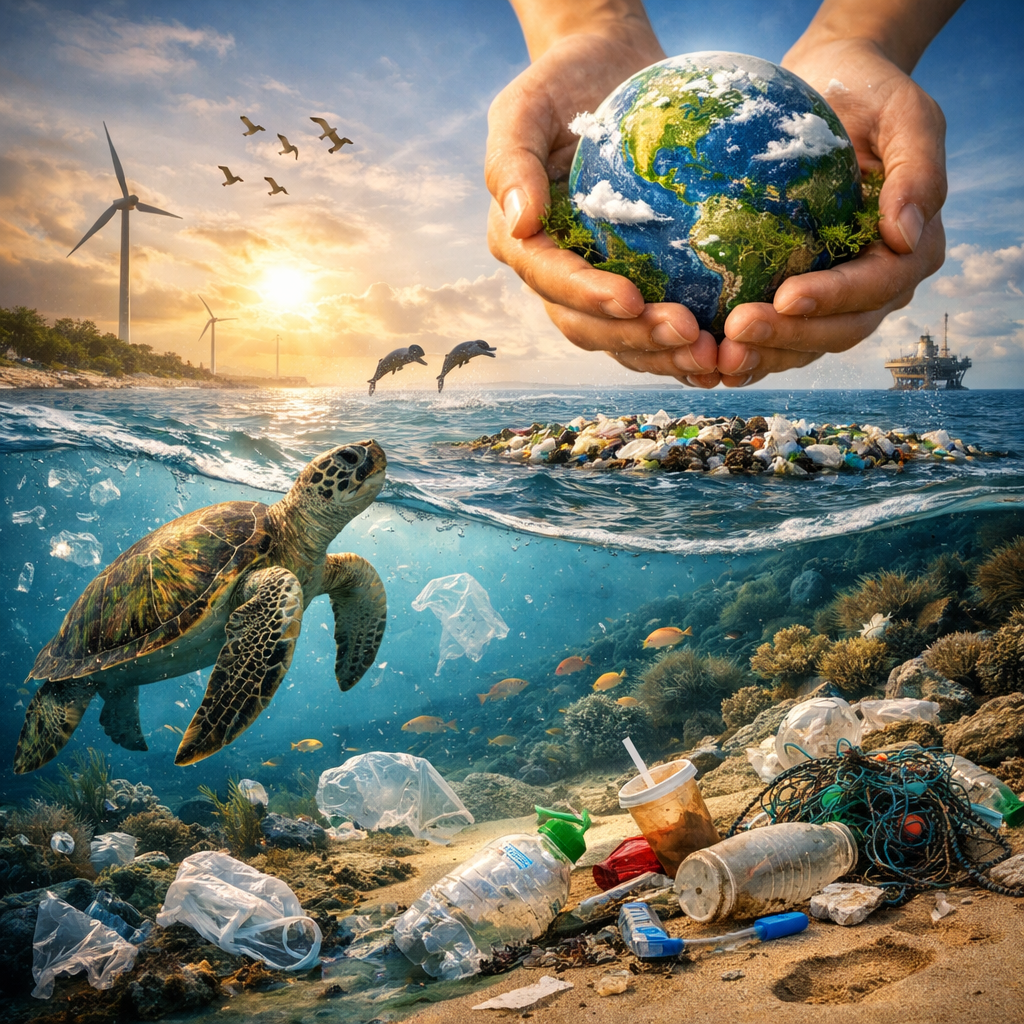
Talking about the sea today is easy.
Talking about the environment seriously is much harder.
Between catchy slogans, “green” campaigns and reassuring promises, there is one real risk: confusing environmental storytelling with true awareness.
The sea does not need trends.
It needs respect, knowledge and coherent choices.
What greenwashing really is
The term greenwashing refers to a communication strategy that makes a company, project or activity appear more sustainable than it actually is. It is a “green wash” of image: the right words, evocative images, but shallow or inconsistent actions.
In the world of the sea and diving, this happens more often than we think:
- isolated environmental initiatives with no continuity
- the use of “eco-friendly” language without real operational change
- promoting nature as a backdrop rather than a value to protect
The problem with greenwashing is not only ethical. It is cultural. It creates illusions, oversimplifies reality and dulls our conscience, making us believe that saying is the same as doing.
Awareness is born from experience
Anyone who truly enters the sea — with a mask, a regulator or a single breath — immediately understands one thing: the ocean is not a scenario, it is a living system. Fragile. Interconnected.
Every dive makes visible what we often ignore on land:
- a broken coral does not regrow in one season
- a disturbed seabed can take years to recover
- a stressed animal changes its behaviour
Environmental awareness does not come from a brochure, but from direct contact. From observation. From silence.
Responsibility, not perfection
Being aware does not mean being flawless. It means being responsible.
It means asking uncomfortable questions:
- how do I move underwater?
- what impact does my presence have?
- am I choosing operators who truly respect the environment?
In diving and freediving, sustainability is not a label: it is a collection of daily behaviours, often invisible, but essential.
The role of Green Sea World Project
This is the direction taken by Green Sea World Project, the environmental organisation promoted by Underwater Academy. Not as a marketing response, but as the natural extension of an educational philosophy.
Green Sea World Project focuses on:
- concrete environmental education integrated into training programmes
- continuous awareness and conservation actions
- building a marine culture based on knowledge and respect
It is not about “saving the sea” through symbolic gestures, but about shaping more conscious people, capable of understanding the marine environment and acting accordingly.
The sea as a teacher
The sea does not ask to be defended with words. It asks to be listened to.
It teaches slowness, balance and adaptation. It reminds us that we are not at the centre, but part of a whole.
When an environmental approach is authentic, there is no need to emphasise it. It shows in the details, in the choices made, in the way we enter and leave the water.
Awareness that lasts
The real difference between greenwashing and genuine commitment is simple:
the first ends when a campaign stops,
the second remains, even when no one is watching.
And it is precisely from here that a new way of experiencing the sea can begin: quieter, deeper. More real.
- Become a scuba diver in a weekend in Malta

- PADI Freediver Instructor Crossover – Malta
- Become a PADI Freediver Instructor: Upcoming Course in Malta – October 23, 24, 25 & 26
| YouTube | facebook | instagram | WhatsApp or telegram group |